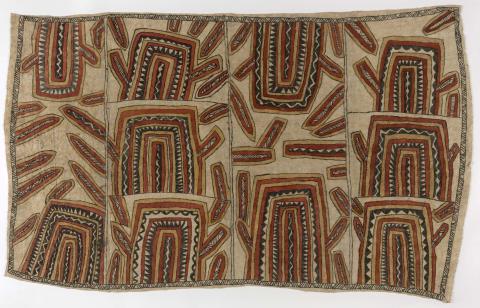
2017.256 UGIOBARI
By Ruth McDougall
September 2025
The nioge or barkcloths created by Ömie women in Oro Province, Papua New Guinea, are much more than aesthetic expressions; they are deeply embedded within everyday and ceremonial life. A senior woman of the Siorajé clan, Sarah Ugiobari is considered the foremost authority on customary dress and marks made on the skin, both of which play a key role in communicating connections to place and people.
During the 1950s, Anglican missionaries established churches and schools and encouraged Ömie villagers to abandon traditional tattoo and initiation practices. Supported by male holders of cultural law, women nioge chiefs began to record tattoo designs on their barkcloth ‘paper skins’ instead. Ugiobari’s nioge documents an ancestral tattoo design the artist learnt from her mother and grandmother.