Sorcerers from Bohemia: Picasso’s Saltimbanques
By Jacinta Giles
December 2025
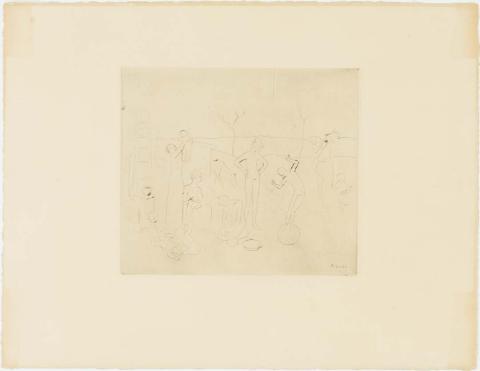
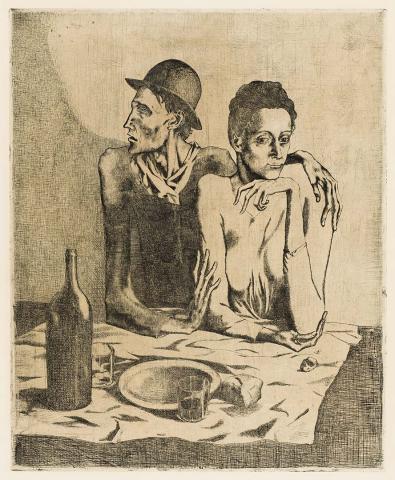
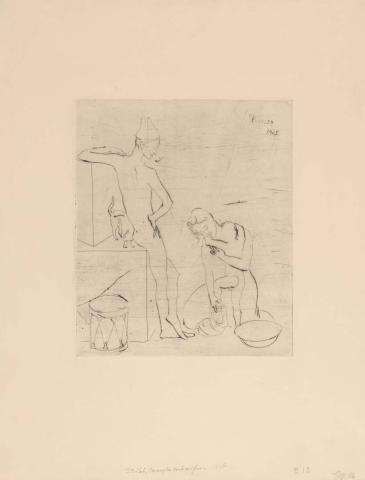
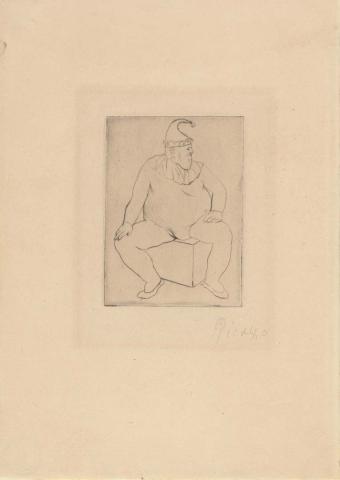
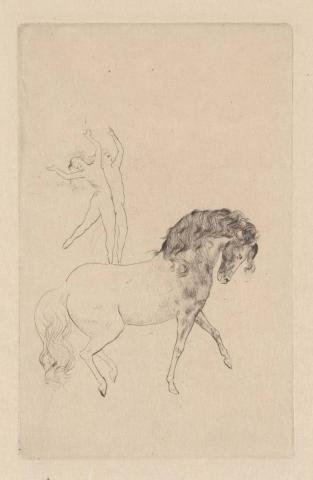
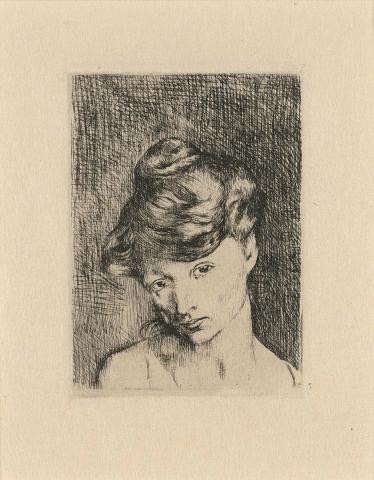
‘Sorcerers from Bohemia’ evokes the free-spirited world of the travelling circus performers, or saltimbanques – the subject of Picasso’s first major body of work in printmaking.
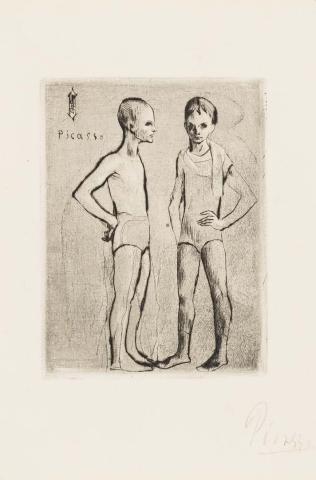
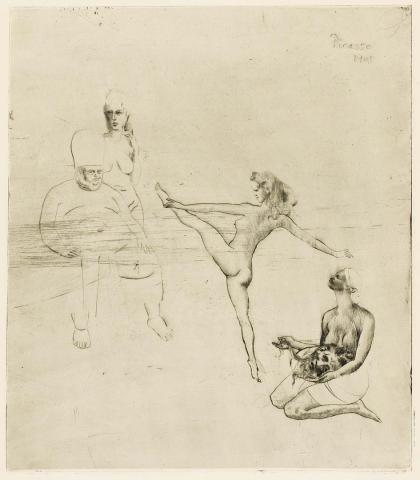
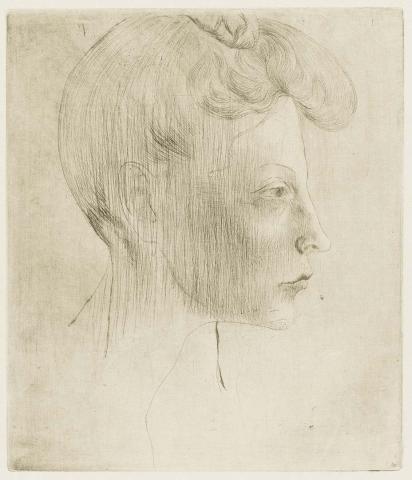
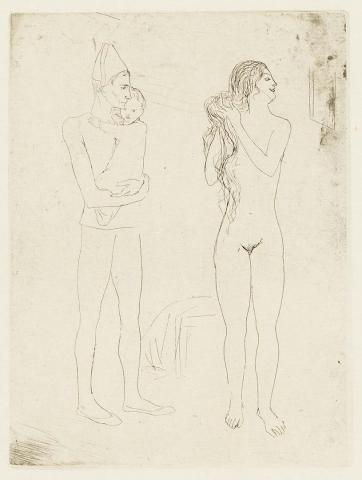
‘La Suite des Saltimbanques’ is a series of 15 loosely related etchings and drypoints that mark a transitional moment in the young artist’s personal and artistic development. Created on the cusp of his Blue (1901–04) and Rose (1904–06) periods, the suite is intimately connected with Picasso’s paintings and drawings of the same era, including the Queensland Art Gallery’s own La Belle Hollandaise of 1905.
On moving to Paris in 1904, 22-year-old Picasso encountered a bohemian crowd of acrobats, jugglers and street performers, whom he sketched as they rehearsed and socialised together. His early depictions focus on the vulnerability and poverty of these itinerant figures, whereas later works pay homage to their strong social bonds and the freedom of their creative lives. Appearing individually and in groups, Picasso’s saltimbanques vary widely in age and fulfil a variety of roles, from clown and friend to mother and king.
Ushering in a lifelong experimentation with printmaking, ‘La Suite des Saltimbanques’ offers extraordinary insights into Picasso’s formative artistic concerns and the social milieu he inhabited at the time. In these sensitive and sympathetic portraits, he conveys the heft of a body, the texture of hair, a playful pose or a tender gesture with remarkable economy and elegance of line, ennobling figures who ordinarily existed on the fringes of society.