PECHSTEIN 2023.219
By Nina Miall
'Towards a Collapsing World: German Expressionism' February 2026
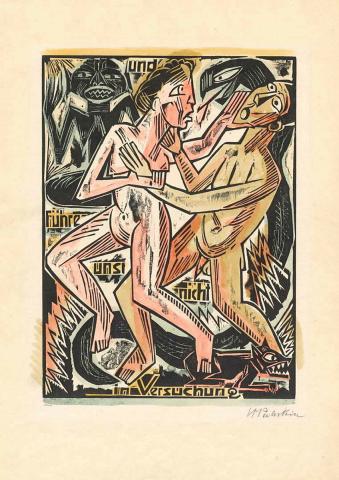
The prevailing sentiment in this image is one of alarm: Two figures are entwined, though it is difficult to tell whether they are seeking solace in an embrace or expressing hostility towards each other. Their enlarged eyes and open mouths suggest mute expressions of horror. Washes of colour imbue their frenetic movements with vitality, which is further emphasised by the energetic, even aggressive linework. With their mask-like faces, these bold, angular figures refer both to the stylisation typical of medieval German woodcuts, and the so-called ‘primitivist’ objects that artist Max Pechstein encountered on his travels to the western Pacific.
This print is part of a portfolio of 12 sheets, each depicting a single verse of the Lord’s Prayer. In the aftermath of World War One, many people turned to religion for guidance, trying to make sense of the war’s incomprehensible violence and the guilt, poverty and unrest that permeated postwar German society. Offering hope for salvation, the Lord’s Prayer resonated with a society facing continual social and political unrest.