KAUS 2023.195
By Nina Miall
'Towards a Collapsing World: German Expressionism' February 2026
In Mädchenkopf (Head of a girl), Max Kaus’s simplified forms, heavily worked lines and a stark monochromatic palette lend the closely cropped girl’s face a sculptural intensity. Her downcast gaze and mask-like features convey a sense of inwardness and emotional restraint, suggesting both vulnerability and quiet resilience.
A member of the November Group, Kaus shared his contemporaries’ belief in art as a vehicle for social and spiritual renewal. The choice of woodcut — a medium associated with a rich materiality and directness of expression — aligns with Expressionism’s rejection of academic finesse in favour of raw emotional truth. Created during a period of political instability and cultural upheaval in Weimar Germany, Mädchenkopf reflects a broader concern with social alienation, youth and the psychological scars left by war, registering the trauma that Kaus experienced serving in World War One.
Connected objects
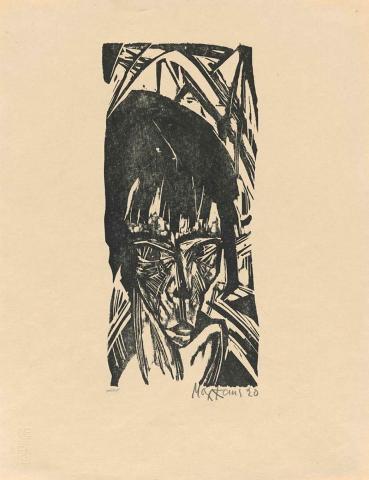
Mädchenkopf (Head of a girl) 1920
- KAUS, Max - Creator