BECKMANN 2023.156
By Nina Miall
'Towards a Collapsing World: German Expressionism' February 2026
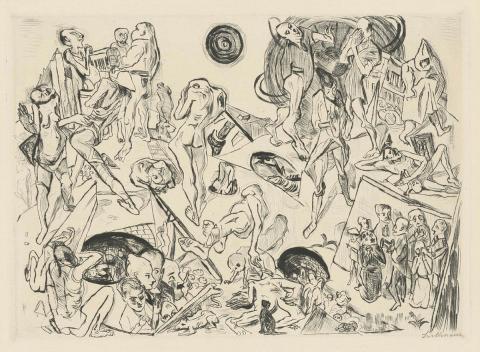
Crowded and claustrophobic, this distorted, desolate landscape writhes with contorted figures who climb, twisting and straining, from the pits of hell. Rather than offering a triumphant vision of redemption, Beckmann’s resurrection is fraught and ambiguous; a convulsive, bodily struggle destined to continue beyond the war’s end.
In Auferstehung (Resurrection), Max Beckmann confronts themes of death, renewal, and spiritual reckoning in the immediate aftermath of World War One. Created as a drypoint, the work reflects the artist’s deep psychological engagement with human suffering and moral crisis, ensuing from the nervous breakdown he suffered in 1915 after serving in the medical corps on the Western Front.
The artist weaves his own story into the scene by including portraits of his friends Ugi and Fridel Battenberg, his wife, Minna, and son, Peter. Towards the bottom of the image, his own self-portrait faces the viewer, half obscured by his wife’s profile.