Kindred creatures: Great and small
Kindred creatures in the Indigenous Australian art collection
By Sophia Nampitjimpa Sambono
Artlines | 2-2025 | June 2025
Over many millennia of coexistence, animals have been paramount to survival as a food source. For First Australians, they are enmeshed into law and culture as images of totemic power, and into the ancestral creation stories that link people, land and animals. A new exhibition celebrates these enduring connections, featuring a multitude of favourites from the QAGOMA Collection, writes curator Sophia Sambono.

Penned by British veterinarian James Herriot and published in 1972, All Creatures Great and Small is a beloved autobiographical novel that inspired two iterations of equally loved television series, and the title of a new exhibition at QAG, opening in June. For Aboriginal and Torres Strait Islander peoples, animals have played a fundamental role in culture and spiritual beliefs for over 65,000 years. Animals form an integral part of relationships with Country and in community, and are foundational to identities, economies, and sustainability. Encapsulating a universally expressed human feeling, the exhibition ‘Great and Small’ reflects on our profound bonds with, and responsibilities to, animals.
Throughout many narratives of creation ancestral beings take on the form of animals as they moved across Country, creating, transforming and interacting with significant and sacred sites. These shapeshifting protagonists established First Australian ways of being, showing how to live on Country and outlining responsibilities to people, place, plants and animals.
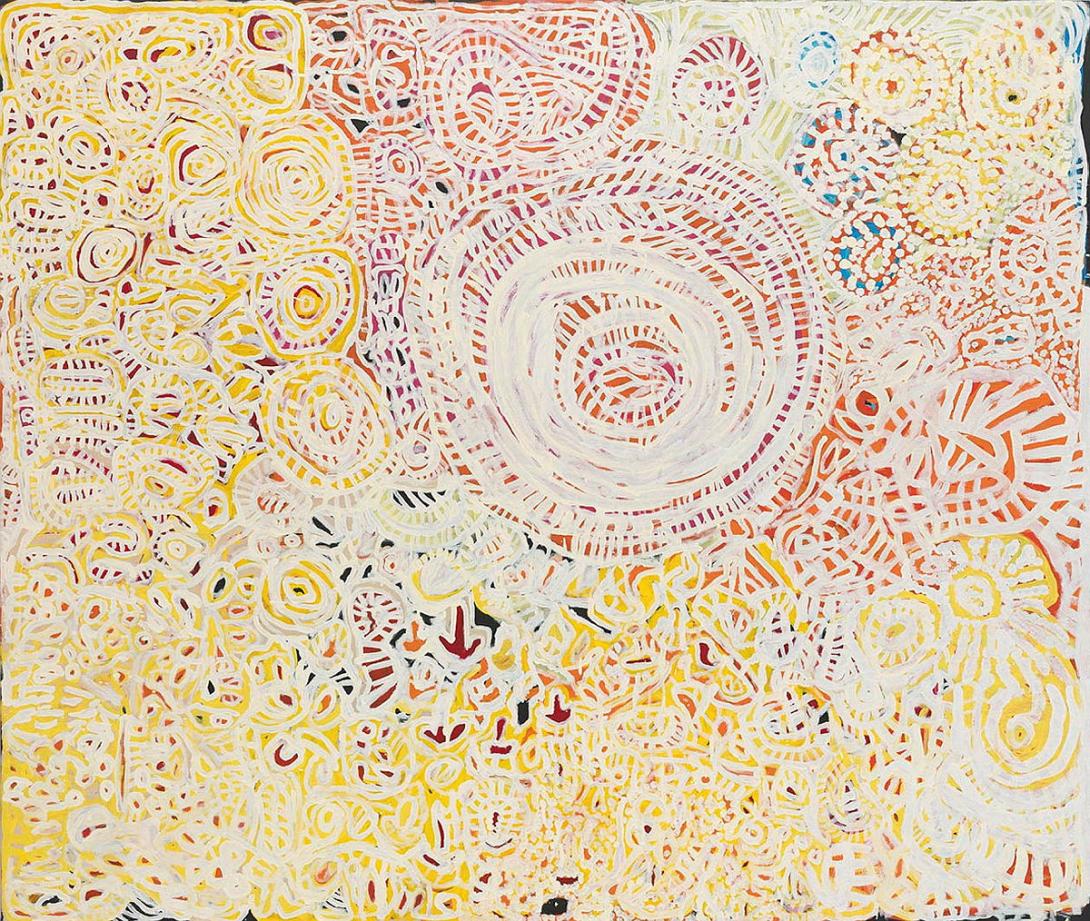
Featured in the exhibition is Pitjantjatjara artist Kunmanara Minyintiri’s Kanyalakutjina (Euro tracks) 2011, which depicts a creation story from the area of the artist’s ngura (birthplace). Minyintiri has mapped the course of epic journeys through laced symbols and iconography. Dreaming tracks of a euro (common wallaroo) and other ancestral animal beings in the form of kangaroo, dog and emu are traced across the canvas, layered with footsteps of dancers who commemorate these journeys through ceremony.
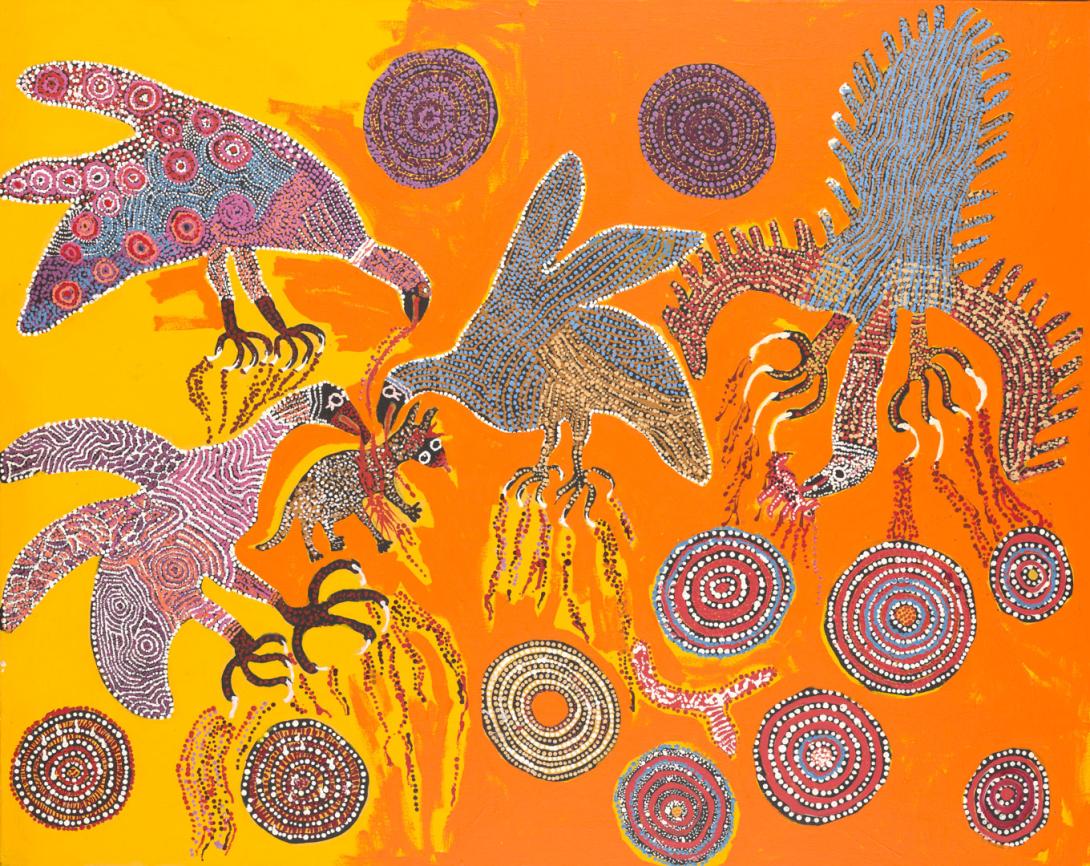
Artists often depict Dreaming narratives, and the totemic animals within them, as expressions of identity and connection, signifying their place in the world. In Aboriginal and Torres Strait Islander societies, totems define peoples’ roles and responsibilities, and their relationships with each other and creation. Integrated into spiritual traditions and societal structures, these kin-centric connections sustained the celebrated biodiversity of Australia’s native fauna.
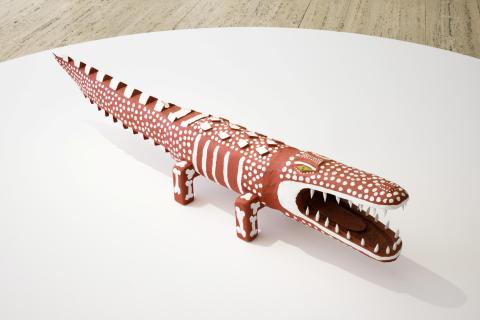
The exhibition highlights the diversity of artistic expression through visual connections between distinct representations of the same totemic animals from different regions. The eagle is presented in painted form by Pitjantjatjara artist Iluwanti Ungkutjuru Ken, in ceramic form by Yankunytjatjara/ Pitjantjatjara artist Carlene Thompson, and in carved sculpture by Wik-Alkan/ Wik-Ngatharr artist Gary Namponan. While Angkamuthi/Yadhaykana artist Teho Ropeyarn’s vinyl cut print Mandang Ikamba (Strength of a crocodile) 2020 holds space with sculptural crocodiles by Silas Hobson (Wuthathi), Craig Koomeeta (Wik-Alkan) and James Eseli (Kala Lagaw Ya), and ceramic representations in Iwayi (Saltwater crocodile) 2019 created by Kaantju/Umpila artist Naomi Hobson.
Enduring relationships with, and systematic connections to, totemic animals are vital for sustainable hunting practices. Hunting is an important intergenerational skill essential for survival, one that is defined by these relationships and often described in stories and songlines. The artworks here both document and pay tribute to the successes and prowess of hunters, celebrating daily life and inherited knowledges.
The undated bark painting Captured kangaroo by Jimmy Jambalulu Mulwirrkbirrk (Jalama people, Iwaidja and Marrku languages) shows a hunter in pursuit, just as his spear pierces his prey. The bark work Echidna 1959, finely detailed depiction of the creature by artist Yirrwala (Kunwinjku people, Duwa moiety), further functions as an instructional document for carving the animal. Joining these works, the vibrantly colourful woven sculpture Woman with bush tucker and goannas 2018 by artist Rhonda Sharpe (Luritja people) is a celebratory moment of success by a determined huntress.
Introduced stock and working animals, like cattle, horses and camels, played a central role in the transformation of rural and remote regions. The land and its people were forever changed by the presence of these animals, and through the subsequent emergence of stockman ‘cowboy’ culture, which became an enduring aspect of Aboriginal identity in Central Australia. This unique lifestyle is illuminated in colourful paintings and sculptural forms by the Hermannsburg Potters, in paintings by Arrernte/Luritja artist Irene Entata from the Hermannsburg Potters in Ntaria, and in Pitjantjatjara artist Niningka Lewis’s pyro-incised Irititja (Early days) 2013.
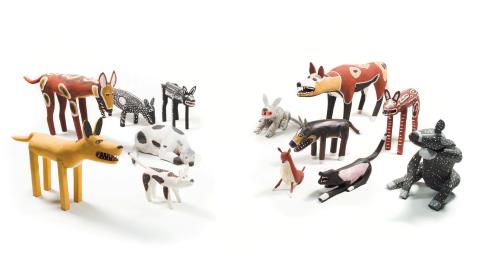
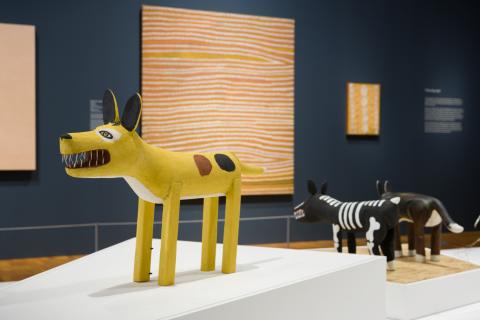
‘Three-dog night’, a saying no doubt employed by many a desert country drover, refers to a night so cold that three dogs are needed to keep you warm in bed. The phrase exemplifies the depth of human– canine companionship and relationships in this region and throughout the continent. Dogs are a prominent fixture in almost all Aboriginal communities and, for places like Aurukun, which is situated in dingo country, ‘a dog is not just a dog, but an ancestral force of extraordinary potency’ akin to its native counterpart.1 The ku’ (camp dogs) sculpted by Craig Koomeeta, Gary Namponan, and Wik-Mungkan artists Jack Bell and Roderick Yunkaporta, point to the individual characters of these four-legged community members as well as to the dog dreaming tracks and songlines that criss-cross their homelands. The sculptures join painted dog and dingo Tjukurrpa stories by Pintupi artist Mick Namarari Tjapaltjarri, and Gija artist Mabel Juli’s 2004 painting Marranyji and Dinal, which abstractly illustrates the story of a woman searching for her dog, who has chased a kangaroo into a water-filled cave.
The veritable menagerie of animal forms throughout ‘Great and Small’ evoke delight and intrigue as they showcase regional and individual styles of representation. Each work honours these deep and ancient connections, and embodies their creators’ contemporary experiences and expressions of culture.
Sophia Nampitjimpa Sambono (Jingili people) is Associate Curator, Indigenous Australian Art.
‘Great and Small: Kindred Creatures in the Indigenous Australian Art Collection’ is on display until mid-2027 in the Dr Paul Eliadis AM Galleries (1 and 2)), QAG. To make the most of your visit, check the exhibition dates, get information on getting here and parking, and find out about Gallery accessibility.
- Nicolas Rothwell, ‘Aurukun dogs have their day’, Australian, 24 August 2010.
Explore 'Great and Small'
Digital story context and navigation
GREAT AND SMALLExplore the story
'Great and Small'
Jun 2025 - May 2027