GOULD 1:1286
By Australian Art team
March 2026
WB Gould’s Still life with game c.1838–45 depicts the spoils of a hunting and fishing trip in vivid detail. Gould’s painting was influenced by a genre of seventeenth-century European still lifes known as vanitas or memento mori. These artworks depict symbols of life’s brevity, including ripe fruit and flowers in full bloom on the cusp of decay, alongside objects of leisure that allude to the pitfalls of coveting worldly possessions.
Through his careful depiction of feathers and scales, Gould showcases the beauty and abundance of Australian game – exotic for new arrivals to the colony – the pleasures of hunting and fishing. The animals are posed as reminders of their former vitality: the birds’ wings fall into curves that mimic flight and a tangle of fish appear to swim in an imaginary waterway. The humble housefly, a common subject of memento mori, represents mortality. By adopting European artistic traditions in colonial Australia, Gould sought to remind viewers of the precarity of life and their own impermanence in a new geographical and cultural context.
Connected objects
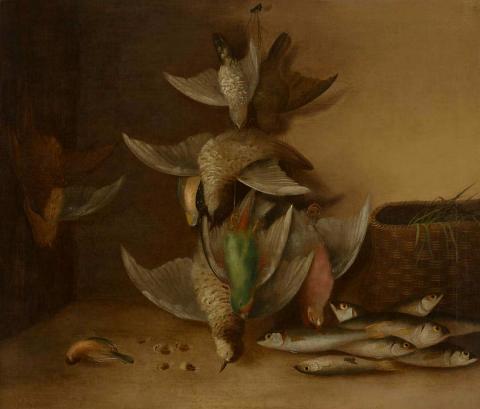
Still life with game c.1838-45
- GOULD, W.B. - Creator