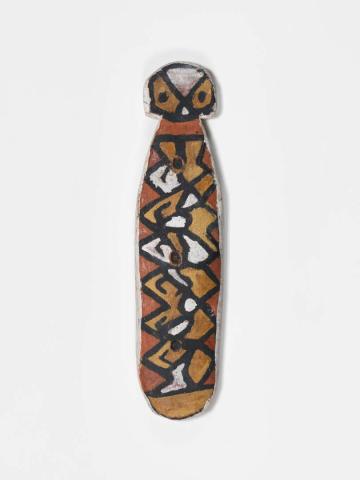
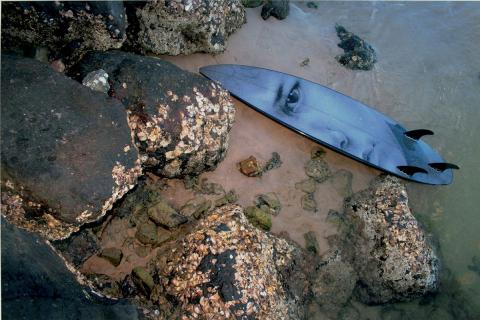
Loaded with visual symbols, Ryan Presley's three-part landscape recalls northern New South Wales colonial sugarcane, banana and timber industries. Painted on reclaimed ‘Red Gold’ (Australian red cedar), he highlights the devastating impact of ‘blackbirding’ practices – the indentured labour of South Sea Islander peoples in Australia. Illustrated on the central shield-shaped panel is a two-person saw, used to fell forests of ancient red cedar to near-extinction. The metal from these saws was often repurposed by ‘stamping out’ a machete-style blade, ideal for clearing undergrowth. By using this motif, Presley signals the historical ‘end’ of the timber industry, and the rise of the banana and sugarcane industries that were so detrimental to its shackled workers. The triptych points to the ongoing effects of colonialism, mortality and freedom on the land, on its original custodians, and on the lives of the indentured labourers, their families and communities.
The Queensland Government formally recognised the Australian South Sea Islander community on 7 September 2000. The statement attests to the exploitation and injustices the community was forced to endure, as well as their significant contributions to the economic, cultural and social development of Queensland. To date, no formal apology has been issued by the state, despite requests from the community.