Sonabai's influence on Rajwar sculpture
By Abigail Bernal Asian and Pacific Art team
August 2015
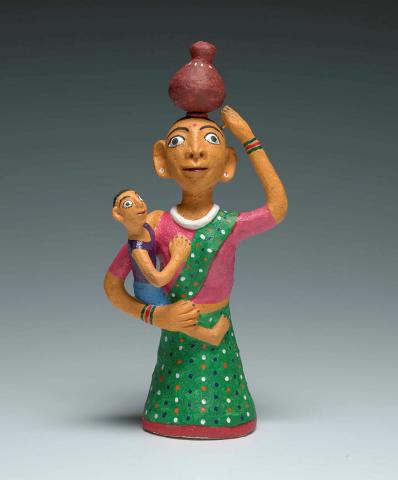
The Rajwar community of Surguja, Chhattisgarh in the state of Madhya Pradesh, is now renowned for creating clay sculptural works of figures, reliefs, screens and architectural elements. This practice is credited to the innovation of one artist, Sonabai (c.1930–2007), who decorated her house with clay and pigment sculptures while she was kept in isolation from the outside world for over 15 years. Sonabai's work was shown in APT3 in 1999 and was gifted to the Collection.
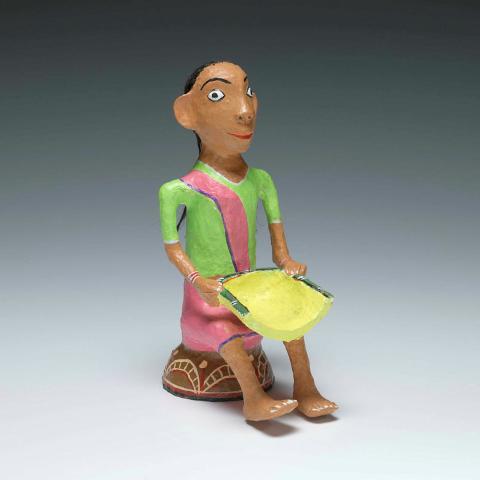
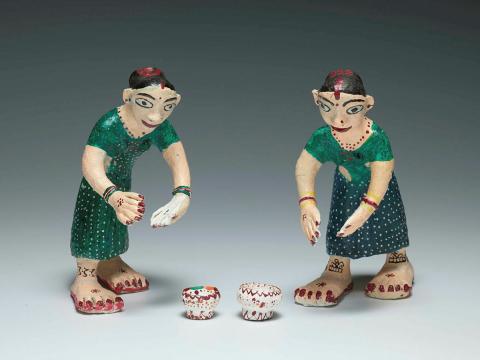
Sonabai lived in the remote village of Puhputra and her practice has been a life-changing legacy to her community. Traditionally, Rajwar people created simple geometric designs to decorate newly white-washed and repaired houses for a post-harvest festival. Sonabai used similar materials of painted clay, but transformed the simple geometric reliefs, revitalising and building upon the customary practice to create colourful figures of humans and animals, of nature and plants, and decorative screens and reliefs. Sonabai taught her artform to a younger generation of artists, both at home but also in more formal workshops. Her son, Daroga Ram, watched his mother from infancy and, once she achieved recognition from the outside world, was allowed by his father to participate in the process.
Bhagat Ram Rajawar is a distant cousin of Sonabai's son, who grew up close to the artist's house and was taught by her as a child. His close friend, who has also become a successful artist, is Atma Das Manikpuri, who was born in a nearby village and was unable to afford formal training. Both Manikpuri and Rajawar were accepted into government-subsidised courses taught by Sonabai, which gave them the training they needed to become professional artists. Both artists have been able to make a living from their work, and search for innovative means of making the sculptures stronger and more durable, while addressing new themes and subjects. Rookmani Bai, Manikpuri's wife, has also become an innovative artist in her own right.
Parbatibai Sarthi comes from a landless tribe that were treated as 'Untouchables' prior to Indian independence. Sarthi began teaching herself to sculpt in the mid 1990s after visiting Sonabai's house. Unable to receive instruction, she began obsessively making small figures of horses, deer, bullocks and human figures from clay gathered around her house, experimenting until they no longer broke. Sarthi was inspired both by a new sense of creativity and the hope of making a difference to the future of her family. As a self-taught artist, her figures did not have the same finessed finish of those who studied under Sonabai, but they have a vitality and sense of movement that is unique.
These various artists draw on Sonabai's legacy to create relief screens, structures and clay figures of musicians, dancers, gods and goddesses, birds and animals, trees and vines. They are inspired by personal memories, community rites of passage, local stories and contemporary life.
Feature image: Figures by Daroga Ram and Bhagat Ram Rajawar, installed at QAG for APT, November 2015 / © The artists / Photograph: N Harth, QAGOMA
Connected objects

Boy figure 2015
- MANIKPURI, Atma Das - Creator
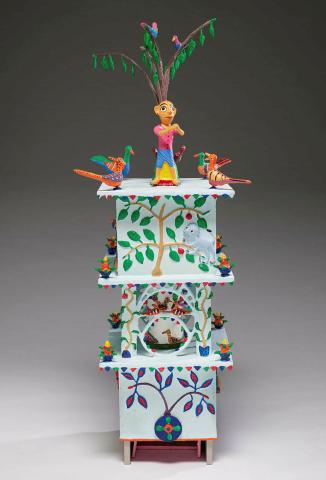

Figure on donkey 2015
- RAM, Daroga - Creator

Five figures 2015
- SARTHI, Parbatibai - Creator
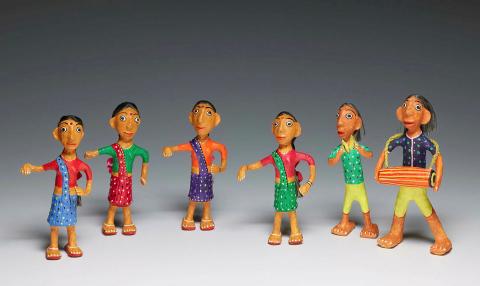

Four figures 2015
- RAJAWAR, Bhagat Ram - Creator
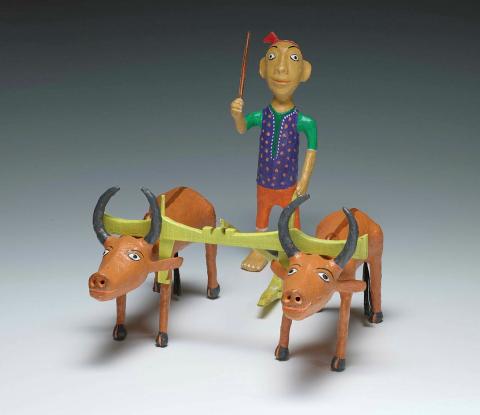

Six figures 2015
- RAM, Daroga - Creator

Tiger figure 2015
- MANIKPURI, Atma Das - Creator

Untitled panel 2015
- RAJAWAR, Bhagat Ram - Creator