The Baroque in ‘Saved by science’ series
By Jacinta Giles
'Worlds within Worlds' March 2026
Curator's insight
Justine Cooper is fascinated by the intersections of science and art – and by the relationship of science to society as a whole. She is especially interested in how we systematise, assign or create value in our culture through scientific research and advances.
From 2003 to 2004, Cooper was artist in residence at the American Natural History Museum in New York – the first in its almost 150-year history.
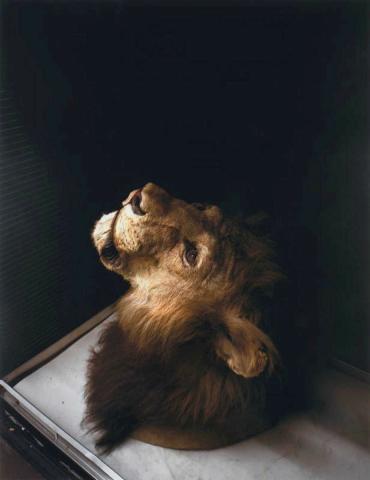
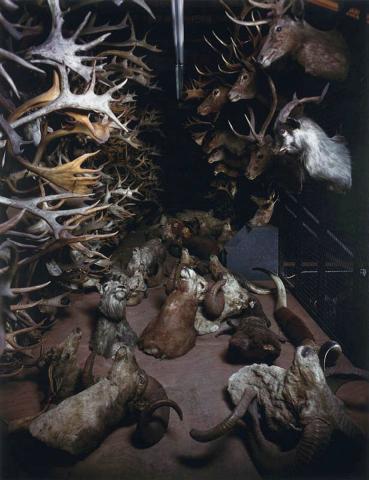
For these photographic works, the artist used a traditional tool of photography: a vintage, large-format wooden camera dating from around 1910.
She used this to detail the Museum’s storage areas as they were being modernised and rationalised, losing the last remnants of the nineteenth century.
This series of works, titled ‘Saved by science’, includes 35 photographs in total – of which two of the works are on display in this exhibition [Worlds within Worlds, 2026].
The photographs examine how the seemingly simple collecting of the natural world is processed into an object of western scientific order, and how the animals collected become, therefore, objects of not only scientific worth, but also of cultural and historical value – and even desire.
That the animals, captured in these images, are slain in the process is a sad irony that attends both their undoubted significance as scientific specimens, and their beauty.
Written and spoken by Jacinta Giles (Assistant Curator, International Art), March 2026
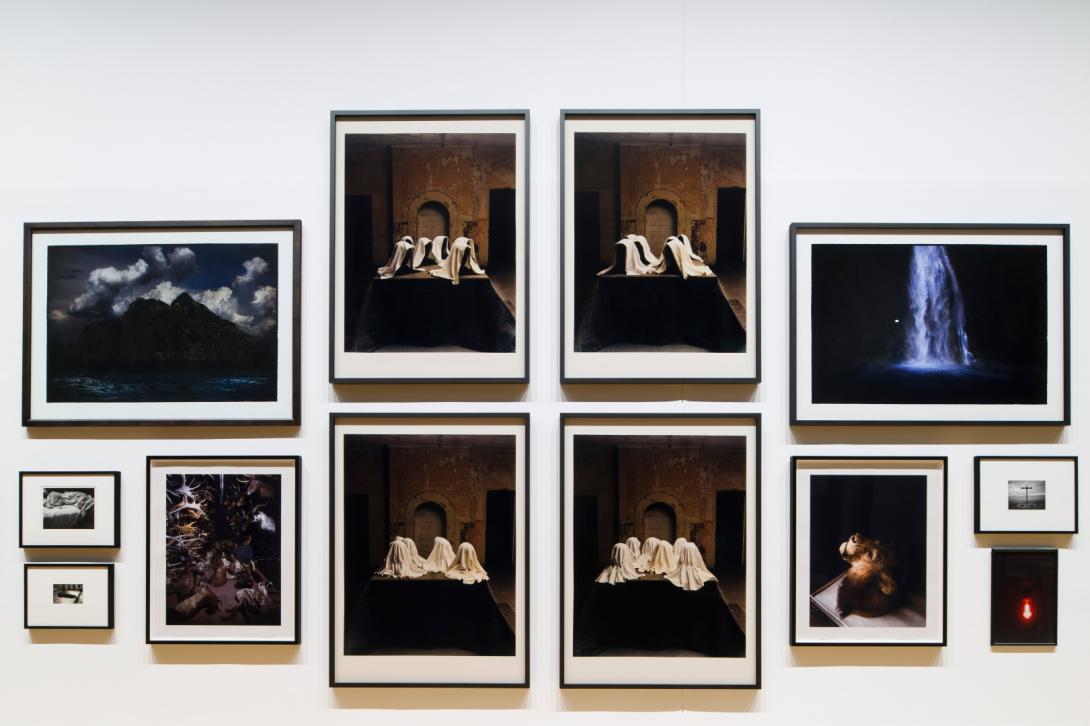
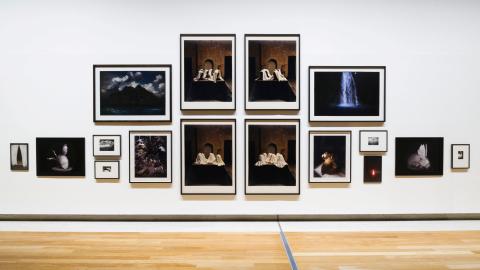
Works by Gavin Hipkins, Anne Noble, Bill Henson, Justine Cooper, Imogen Cunningham, Anne Ferran and Laurence Aberhart installed for ‘Worlds within Worlds’, QAG, March 2026 / © The artists / Photograph: J Ruckli, QAGOMA