Raja Ravi Varma's legacy and influence
By Abigail Bernal, Tarun Nagesh
The Raja Ravi Varma Conservation Project September 2025
Explore the legacy of one of India’s most iconic artists, Raja Ravi Varma (1848–1906). Renowned for his vivid portrayals of Hindu gods and epic tales, Ravi Varma’s works have been reproduced and cherished across the world since the late nineteenth century. A significant selection of these works is featured in the exhibition 'The God of Small Things: Faith and Popular Culture'.
On display until October 2026, ‘The God of Small Things: Faith and Popular Culture’ explores how images of the divine circulate through everyday life. The exhibition brings together art from across India and South-East Asia to consider how divine figures move between temple, home and the public sphere, and how popular culture has shaped — and been shaped by — religious iconography.
At the centre of the exhibition is a group of works by Raja Ravi Varma (1848–1906), often described as India’s first modern artist. Ravi Varma’s synthesis of Indian mythological subjects and European academic realism transformed the visual culture of his time.
In 1894, Ravi Varma founded India’s first chromolithographic press in the country’s capital, Bombay (now Mumbai). Using advanced German printing technology, he reproduced his paintings as oleographs — vibrant lithographic prints, varnished to resemble oil paintings. Affordable and easily distributed, these prints made Hindu imagery accessible at a time when temples were restricted based on caste and gender. Ravi Varma’s depictions of Hindu gods and goddesses, inspired by epic narratives such as the Ramayana and Mahabharata, presented divine figures in a relatable, humanised style that became widely influential.
Many of the works by Ravi Varma included in ‘The God of Small Things’ were further transformed through hand-applied embellishment and the time-honoured craft of zardozi, a type of elaborate embroidery practised in parts of West, Central and South Asia that uses metal thread to create ornate designs. These additions to Ravi Varma’s prints were not merely decorative; they were intended as marks of care, affection and reverence for the deities depicted. The challenge for conservators preparing the works for display at QAGOMA was to stabilise fragile materials while honouring the histories embedded in these interventions. This inspired deeper consideration of the conservation opportunities within such a broad collection of Ravi Varma oleographs.
The works in ‘The God of Small Things’ illuminate how myth and spirituality remain active forces, continually reimagined by artists. These works by Raja Ravi Varma demonstrate that, in the spaces between the personal and the public, and between the ritual and the everyday, divine and devotional iconography is thriving.
Abigail Bernal is Curator, Contemporary Asian Art, QAGOMA.
In conversation
In the video below, special guests discuss Ravi Varma’s lasting impact on faith, cinema and contemporary art, and reflect on the importance of celebrating and preserving his legacy.
Speakers
Anubhav Nath, Founder Director, Ojas Art
Chaitanya Sambrani, Associate Professor, Centre for Art History and Theory, Australian National UniversityHost
Tarun Nagesh, Curatorial Manager, Asian and Pacific Art, QAGOMA
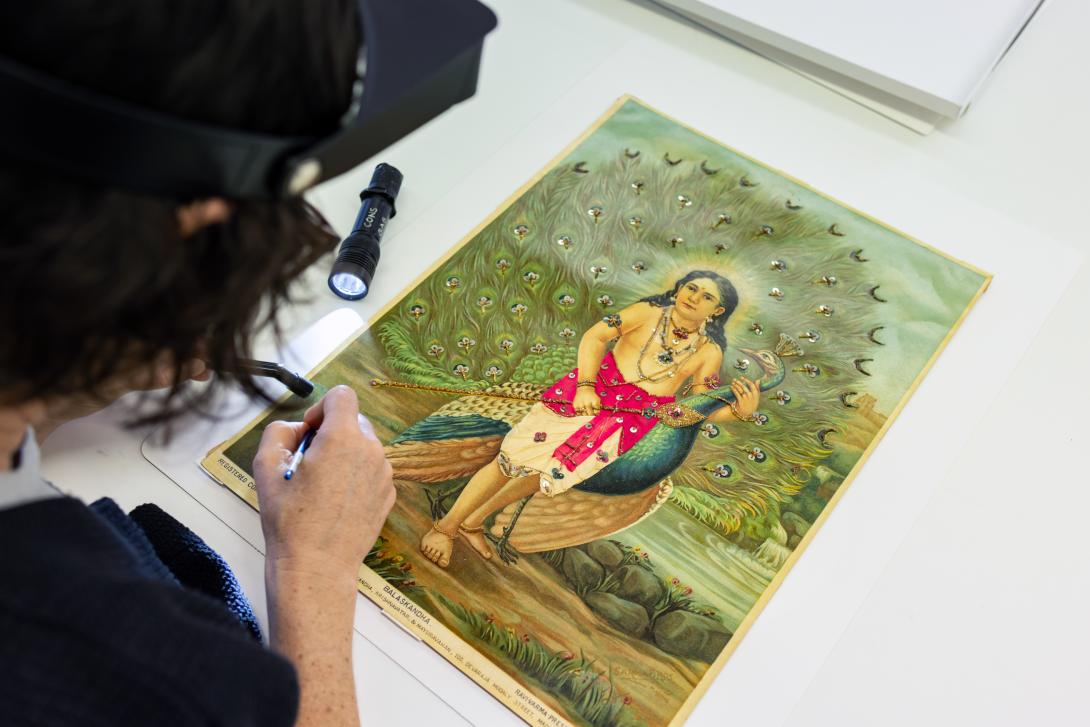
A Raja Ravi Varma oleograph, Bala Sakandha 1894–1930, undergoes conservation treatment at the Queensland Art Gallery, September 2025 / Photograph: S Do Rozario, QAGOMA
Explore the Ravi Varma Conservation Project
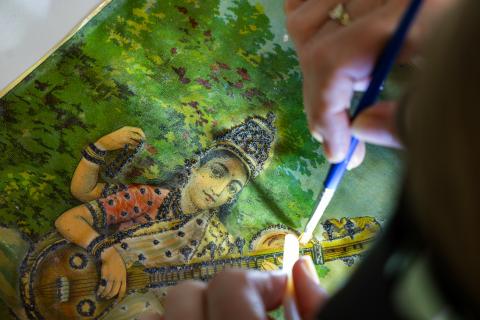
Digital Story Introduction
The Raja Ravi Varma Conservation ProjectConserving Ravi Varma oleographs
Read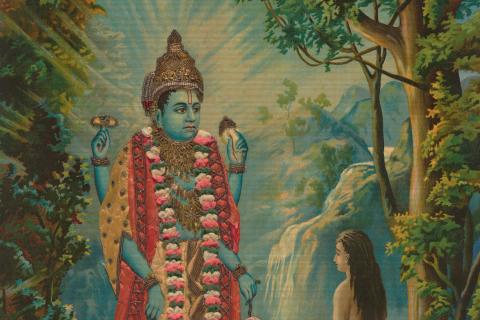
Digital story context and navigation
The Raja Ravi Varma Conservation ProjectExplore the story
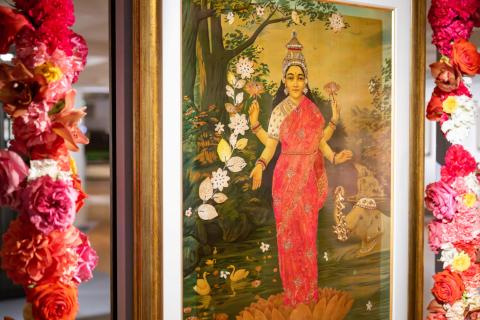
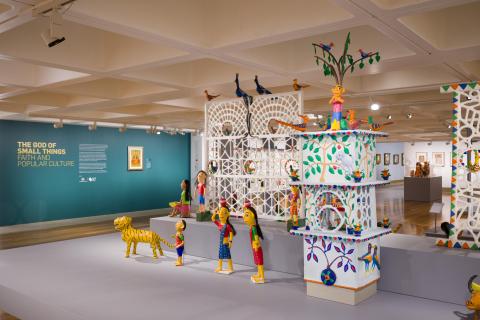
The God of Small Things
Read ESSAY
Digital Story Introduction
The Raja Ravi Varma Conservation ProjectConserving Ravi Varma oleographs
Read