What is zardozi embroidery?
By Zenobia Frost
'The God of Small Things' December 2025
Zardozi, meaning ‘gold embroidery’ in Classical Persian, refers to an elaborate form of embroidery with metal embellishments. The practice employs gold and silver thread, along with coiled or flat wire, and may incorporate beads, precious stones and pearls. Zardozi reached India from West and Central Asia in the twelfth century and flourished during the Mughal era (1526–1857), becoming a prominent artform that continues today. It may be used to decorate wedding or formal wear or, as in the case of these oleographs, practised as an act of reverence to embellish religious imagery.
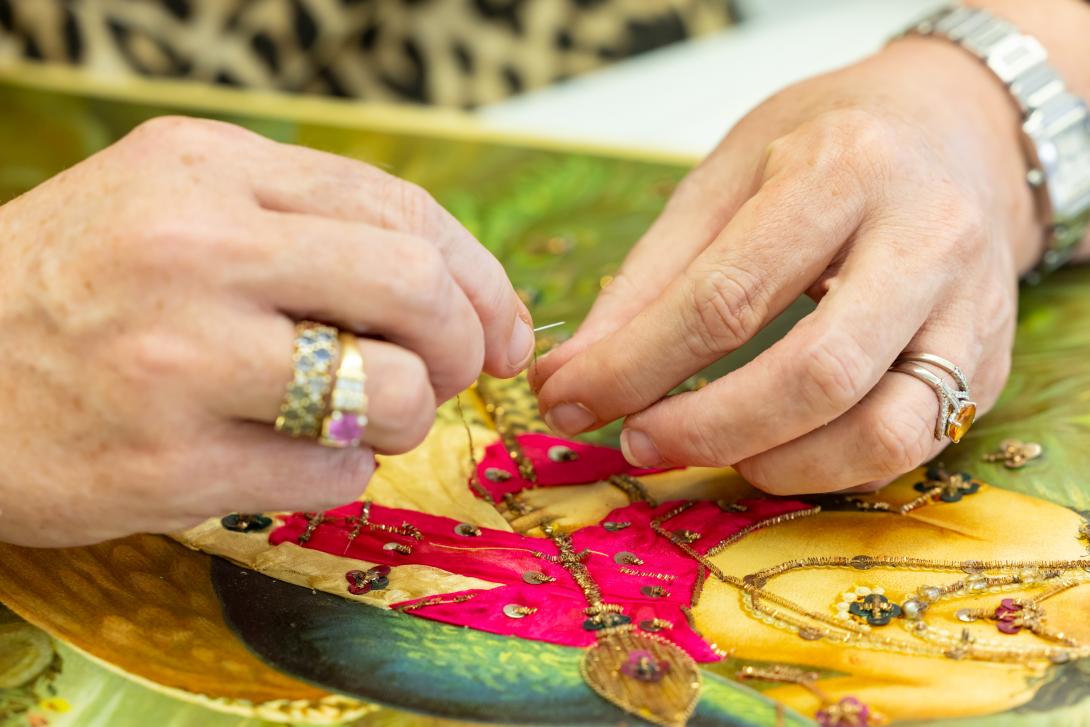
A Raja Ravi Varma oleograph undergoes conservation treatment at the Queensland Art Gallery, September 2025 / Photograph: S Do Rozario, QAGOMA
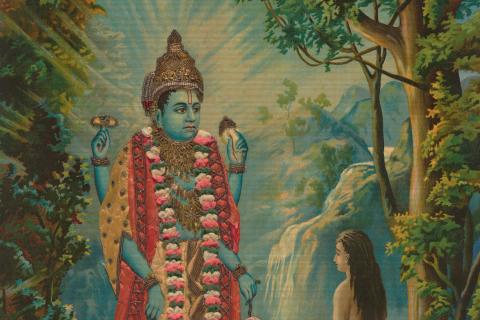
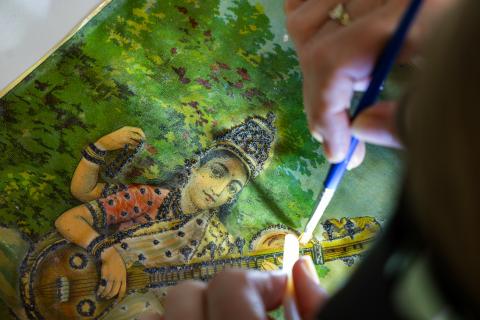
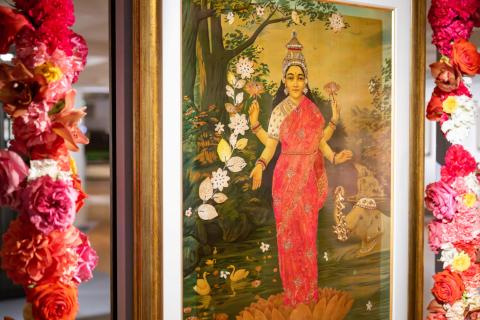
QAGOMA holds a number of oleograph prints by pioneering Indian artist Raja Ravi Varma (1848–1906), who founded India’s first chromolithographic press in Bombay in 1864. Marking the prints' transformation into devotional objects in everyday homes, many were embellished with zardozi and other hand-applied materials.
Explore the Ravi Varma Conservation Project
Digital Story Introduction
The Raja Ravi Varma Conservation ProjectConserving Ravi Varma oleographs
ReadDigital story context and navigation
The Raja Ravi Varma Conservation ProjectExplore the story
Digital Story Introduction
The Raja Ravi Varma Conservation ProjectConserving Ravi Varma oleographs
Read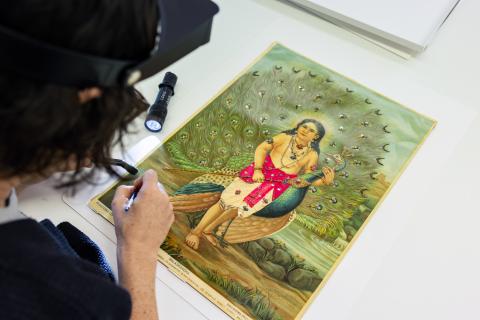
Digital Story Introduction
The Raja Ravi Varma Conservation ProjectRaja Ravi Varma's legacy and influence
Read
'The God of Small Things'
Sep 2025 - Oct 2026