Worlds within Worlds
Baroque Traditions, Contemporary Visions
By Jacinta Giles
Artlines | 1-2026 | March 2026
Presented in Gallery 4 of the Queensland Art Gallery, ‘Worlds within Worlds: Baroque Traditions, Contemporary Visions’ explores how the symbolic and stylistic features of Baroque art are invoked by contemporary artists, who — like their predecessors of the seventeenth and eighteenth centuries — are reflecting on a world in flux, writes curator Jacinta Giles.
Comprising works of art from across the Gallery’s collecting areas, ‘Worlds within Worlds’ suggests parallels between the desire of artists from Baroque and contemporary periods to interrogate structures of religion and power, the changing relationship between humanity and nature, and ideas of decay and destruction.
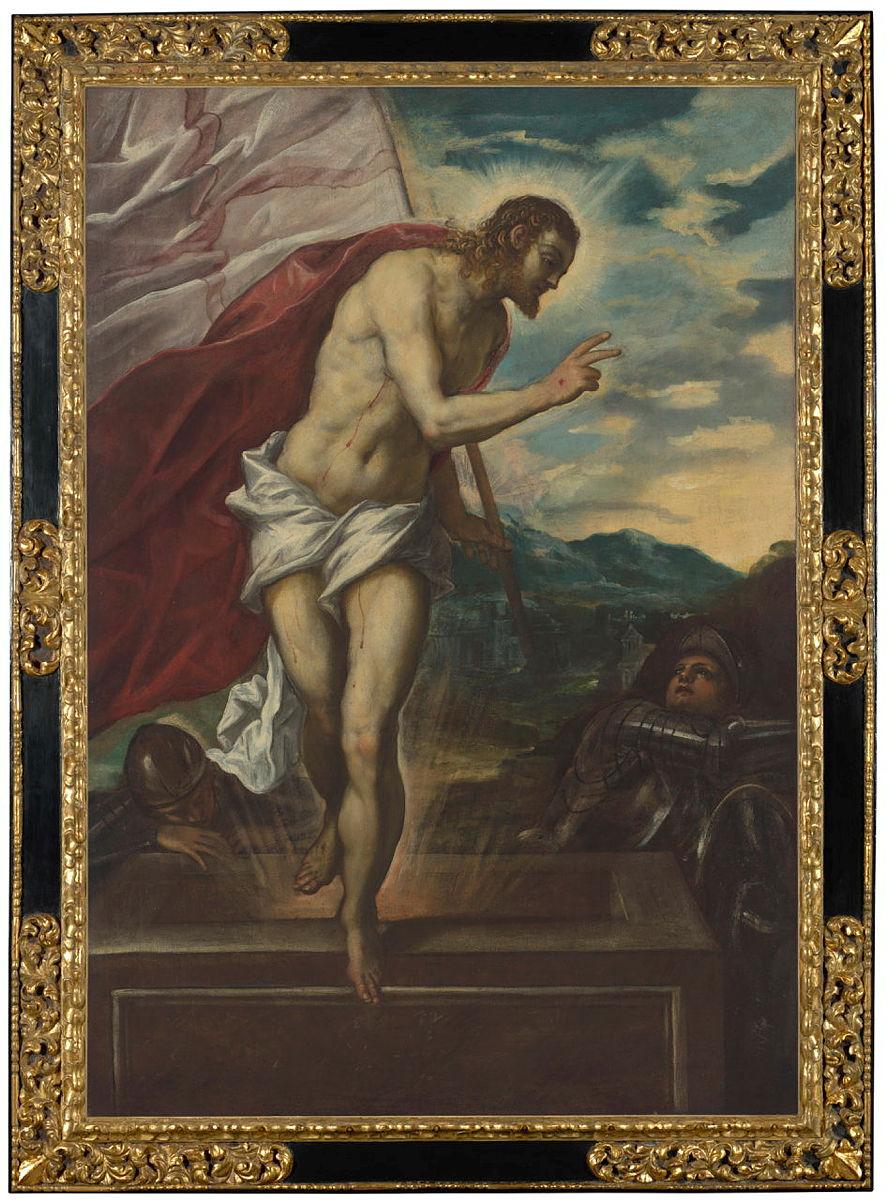
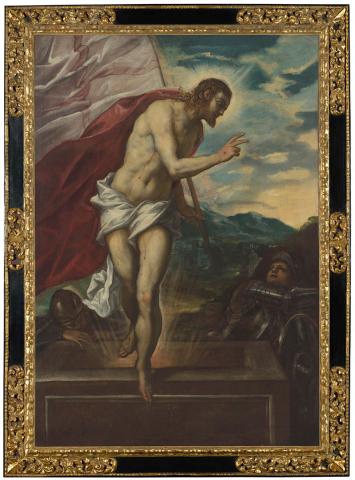
Tintoretto / Italy 1518–94 / Cristo risorgente (The risen Christ) c.1555 / Oil on canvas / Purchased 1981. Queensland Art Gallery Foundation
As visitors enter the exhibition, they will first find Cristo risorgente (The risen Christ) c.1555 by Tintoretto in an altar-like setting. This painting acts as a bridge between the historic Baroque and the contemporary artworks in the exhibition. Although the date of the painting technically makes it Late Renaissance (also known as Mannerism), Tintoretto is regarded as the father of Baroque art. His innovative fusion of asymmetrical compositions, contrast between light and shadow, visceral emotion, and cinematic scenes that blur the boundaries between reality and spiritual piety, profoundly influenced later Baroque masters such as Caravaggio, Diego Velázquez and Peter Paul Rubens, making Tintoretto a crucial precursor to the movement. For the first time, the Gallery is hanging this painting (which normally resides in the historical international Philip Bacon Galleries at QAG) at the height it is believed the artist intended; as an altarpiece, likely commissioned by the Church.
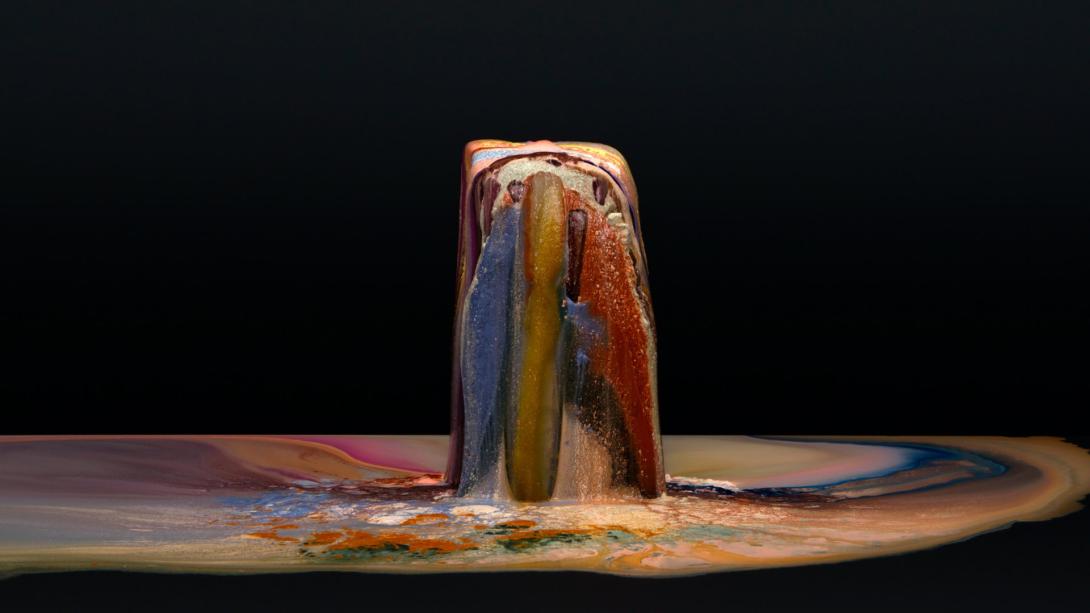
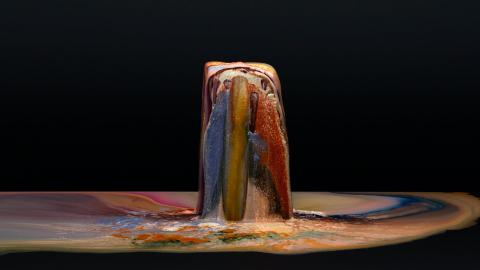
Dawn Ng / Singapore b.1982 / The Earth is an hourglass (still) 2024 / Single-channel 4K video: 38:33 minutes, colour, 16:9 / Purchased 2024 with funds from the Melbourne Art Foundation and the QAGOMA Art Foundation / © Dawn Ng
Across from the Tintoretto is Singaporean artist Dawn Ng’s The Earth is an hourglass 2024, a time-lapse video of the melting of a paint pigment-infused block of ice. Through this work, Ng explores the passage and experience of time. The Baroque era’s fascination with time tended to emphasise its fleeting nature, presenting it as moving, changing and impermanent, rather than the static sense of time common in the Renaissance. For Baroque-era artists, the passing of time could be made visible in the depiction of still-life objects, such as decaying fruit and wilting flowers (known as vanitas). Ng’s lush ice block invokes the Baroque logic of a decaying vanitas object through its transitional state — as it thaws and melts — suggesting the sense of time running out.
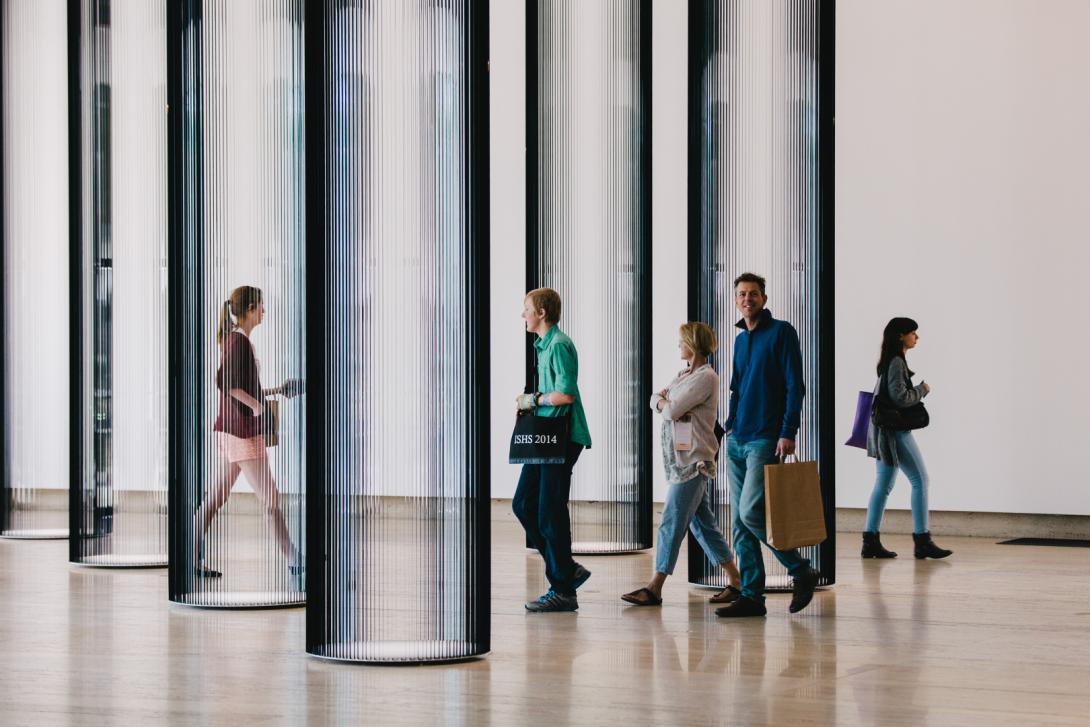
A view of Žilvinas Kempinas’s Columns 2006, installed at QAG for 'Sublime' in 2014 / Purchased 2012 with funds from Tim Fairfax AM through the QAG Foundation / Photograph: J Ruckli
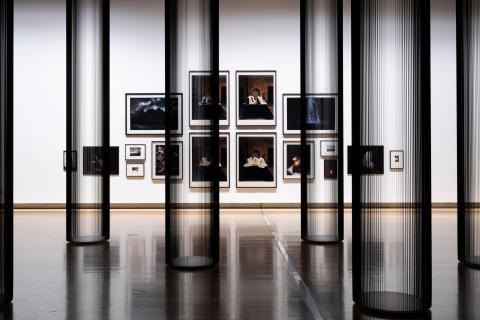
Occupying the centre of the exhibition space is Lithuanian artist Žilvinas Kempinas’s Columns 2006, made from magnetic video tape. The immersive sculpture transforms a neo-classical architectural element into a vehicle through which to express social concerns of our times — raising questions about technological obsolescence in a consumer-driven world — while also acting to destabilise fixed ways of seeing. For the artists of the Baroque, the column was not merely an orderly structural support, as it had been during the Renaissance, but a dynamic object that could suggest infinite worlds, encouraging the viewer’s gaze ever upwards towards divine aspiration. Often spiralled and clustered to create a sense of illusionistic space, the Baroque column was also used to manipulate perception, making it difficult for viewers to distinguish between reality and illusion.
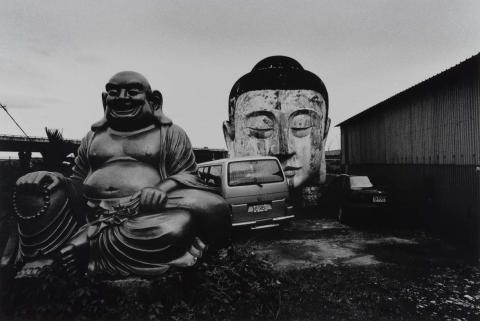
On the walls surrounding Columns, visitors encounter photographs from Yao Jui-Chung’s series ‘Everything will fall into ruin’ 1990–2009. Yao has captured the contemporary ruin, scattered throughout Taiwan and its surrounding islands, as evidence of the shifts of power in Taiwan’s sociopolitical history. During the Baroque period, ruins were seen as powerful symbols that allowed artists to explore the fragility of human experience, the passage of time, and the ultimate fall of power — be it political or spiritual. Artists would fill their canvases with crumbling buildings and overgrown arches, creating imaginative spaces through which viewers could consider lost pasts and possible futures.
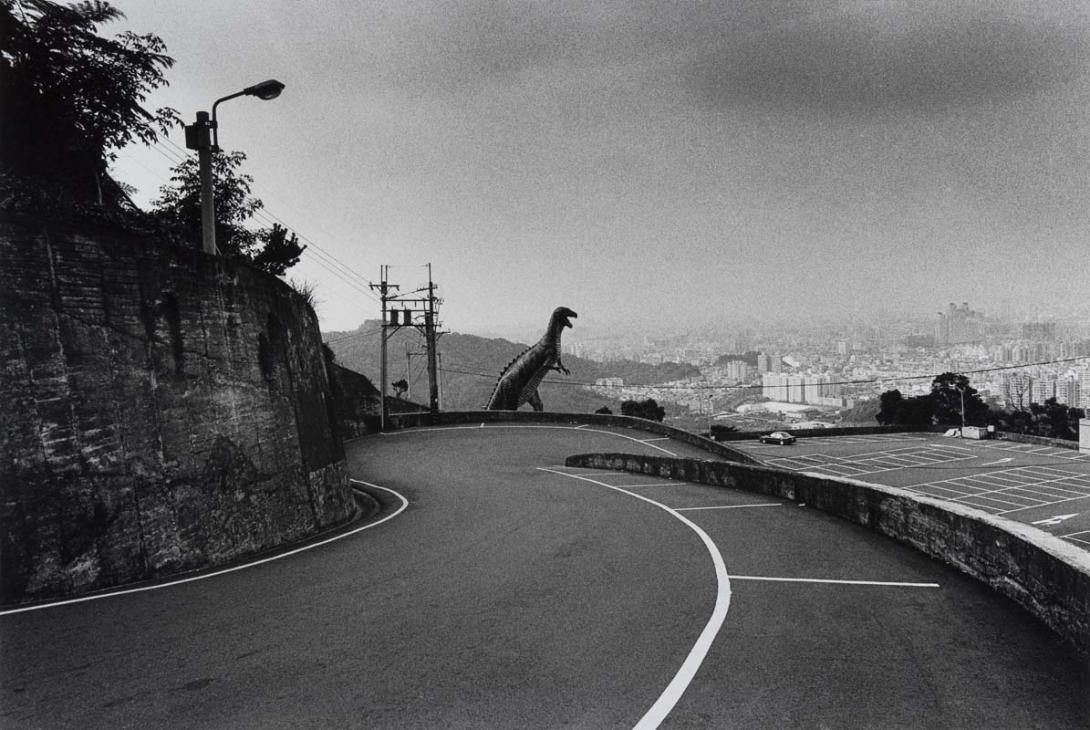
Yao Jui-Chung / Taiwan b.1969 / (Untitled) (from 'Everything will fall into ruin' series) 1990-2009 / Black and white digital photograph on paper / Gift of the artist through the Queensland Art Gallery Foundation 2009 / © Yao Jui-Chung
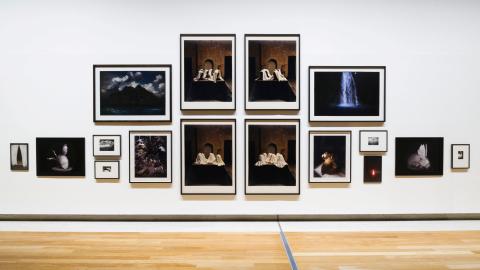
Opposite Yao’s ruins are photographic works by New Zealand artists Anne Noble, Laurence Aberhart and Gavin Hipkins, Australians Bill Henson, Anne Ferran and Justine Cooper, and US artist Imogen Cunningham. Here, visitors will see a typically Baroque use of light, whether to locate the narrative at a particular time of day or to imply the otherworldliness of a subject. In a departure from the Renaissance, the artists of the era frequently relied on dark backgrounds, concentrating light on forms in or around the centre of the composition — a stylistic device known as chiaroscuro (Italian for ‘light-dark’). Many contemporary photographers draw on this theatrical lighting technique — which enables them to guide viewer’s attention and emotions — to create intimacy or drama in their work. Artists Yuki Kihara, Peter Cripps and eX de Medici are also represented here, both surrounding and able to be viewed through Kempinas’s Columns.
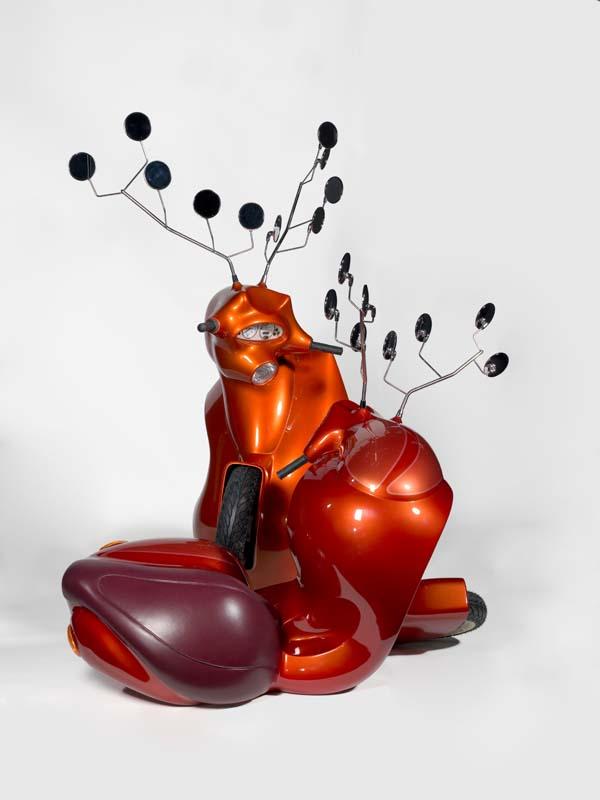
Patricia Piccinini / Australia VIC b.1965 / The stags 2008 / Fibreglass, automotive paint, leather, steel, plastic, tyres / Purchased 2009 with funds from the Estate of Lawrence F. King in memory of the late Mr and Mrs S.W. King through the Queensland Art Gallery Foundation and the Queensland Government's Gallery of Modern Art Acquisitions Fund / © Patricia Piccinini
Nearby, Australian artist Patricia Piccinini’s fantastical Vespa-like beings, The stags 2008, speak to the role of mythology in Baroque art. Myths, such as those found in the Roman poet Ovid’s eighth-century poem ‘Metamorphoses’, offered Baroque artists a rich source of dramatic stories and symbols with which to challenge moral, spiritual and scientific certainties. Part technological and part animal, Piccinini’s ‘stags’ suggest a new kind of mythology for the twenty-first century; one that raises questions about what constitutes life in a time of genetic engineering and biotechnology. The artist’s curious hybrid creatures reflect the Baroque preoccupation with metamorphosis, blending reality with fantasy to explore shifting belief systems.
Responding to the challenges of the twentieth and twenty-first centuries, the works featured in ‘Worlds within Worlds’ each activate a Baroque sensibility to reflect on our similarly unpredictable and unsettled world. Artists demonstrate how the style manifests, in new guises, in times of immense uncertainty, when division, scepticism, and the decentring of power create profound changes to our human experience.
Dr Jacinta Giles is Assistant Curator, International Art at QAGOMA.
Explore works in 'Worlds within Worlds'

Columns 2006
- KEMPINAS, Zilvinas - Creator

The stags 2008
- PICCININI, Patricia - Creator
The Earth is an hourglass 2024
- NG, Dawn - Artist
Digital story context and navigation
WORLDS WITHIN WORLDSExplore the story
'Worlds within Worlds'
Mar 2026 - Aug 2026